Super Rugby stays, the NPC stays, and the big-city unions merge with their Super clubs: NZ Rugby's plan for 2028
New Zealand Rugby's board has rejected scrapping Super Rugby Pacific, kept the 14-team NPC, and approved consolidating the Super Rugby club and provincial union in Auckland, Hamilton, Wellington, Christchurch and Dunedin from 2028, as part of a plan to improve the game's finances by $20 million a year.
Thursday, 29 October 2026
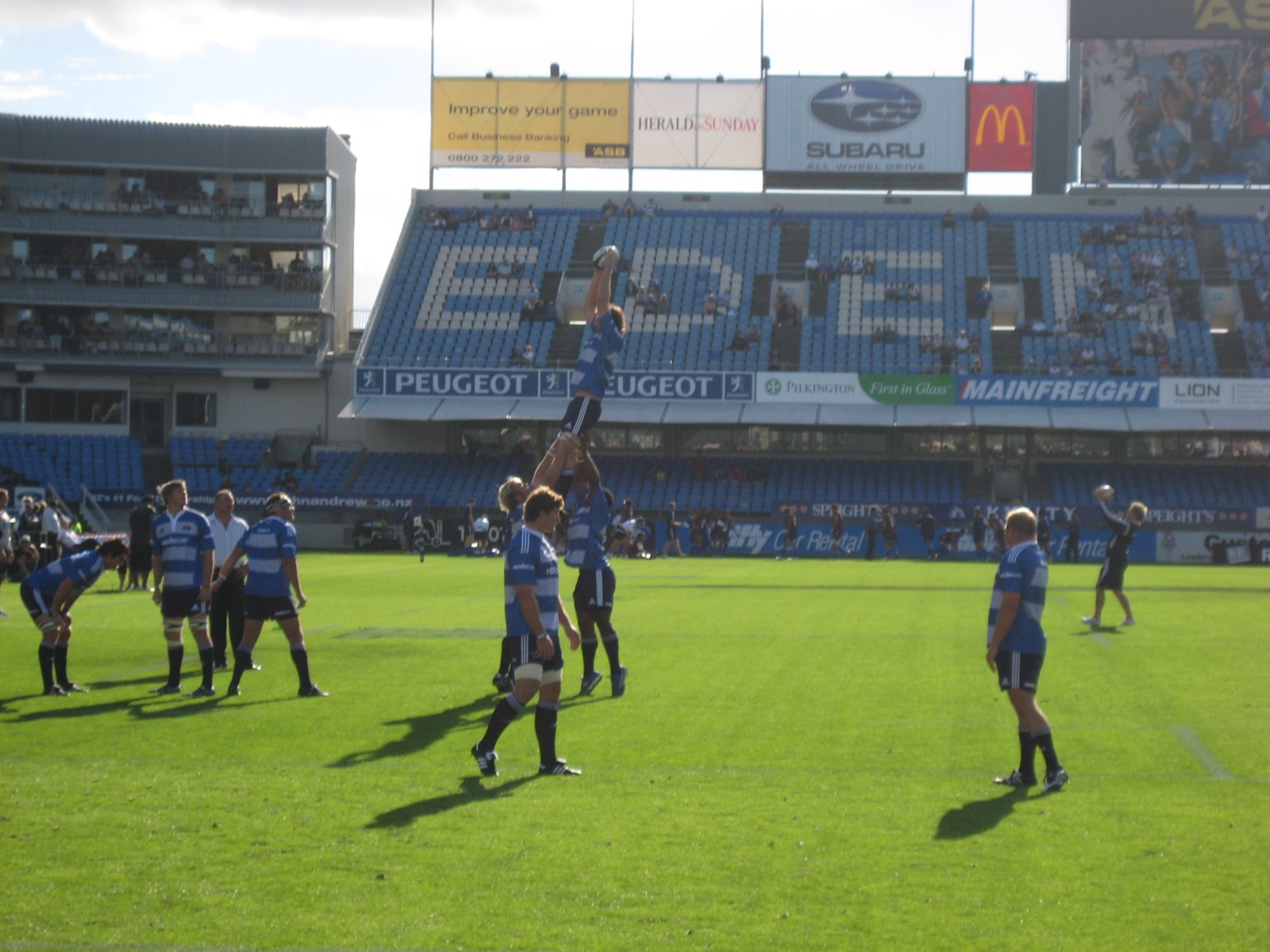
New Zealand Rugby has decided what the men's professional game will look like, and the answer is: much the same on the field, quite different behind it. Super Rugby Pacific stays. The 14-team NPC stays. But in the five cities that have both a Super Rugby club and a provincial union, the two organisations are to be brought together.
The board approved the direction on Thursday 29 October. It is not yet final. New Zealand Rugby said it will now work through the detail with the clubs, unions and players before a final board decision, with changes expected to take effect from 2028.
What was decided
New Zealand currently runs two men's professional competitions through 19 separate professional environments: five Super Rugby clubs and 14 provincial unions. A rugby summit last month put several options on the table, including scrapping Super Rugby Pacific in favour of a smaller professional provincial competition. That idea has been rejected.
Instead:
- Super Rugby Pacific continues, with New Zealand Rugby and Rugby Australia working with the clubs and the players' associations to change how the competition engages fans, attracts investors and makes money. It is to become more independent of New Zealand Rugby's day-to-day management.
- The NPC remains a 14-team provincial competition.
- In Auckland, Hamilton, Wellington, Christchurch and Dunedin, the Super Rugby club and the provincial union will have their operations consolidated, covering community rugby, high performance and finances. That means the Blues and Auckland, the Chiefs and Waikato, the Hurricanes and Wellington, the Crusaders and Canterbury, and the Highlanders and Otago.
- The nine regional unions, from Northland to Southland, are promised stronger relationships with their Super Rugby clubs and stronger pathway protections, so that young players can develop in their home regions.
The money matters. The changes are part of a programme to cut costs across the sport by five percent and improve the game's finances by $20 million a year from 2028. New Zealand Rugby is also reviewing the women's competitions, how community rugby is delivered, and its own structure.
What New Zealand Rugby said
"We are making changes to our game from a position of strength," chief executive Steve Lancaster said. He said the organisation was open to greater player movement between teams, a competition-wide salary cap and centralising commercial assets.
High performance director Don Tricker framed it as a rugby decision as much as a financial one: the principle is to have the best players playing with and against each other more often.
Chief rugby officer Mike Collins was emphatic about the provincial game. "The NPC is absolutely the jewel in New Zealand rugby's pathway," he said, and described the goal as a single, clear pathway for talented school leavers.
The questions it leaves
The announcement did not say what consolidated means in practice: a full merger, a shared back office, or something in between. Nor did it set a date for the final decision.
The Otago Daily Times pointed out that this is, in one sense, a return to the past. The Otago union ran the Highlanders for the franchise's first 14 years, before the two were separated; the Highlanders are now mostly privately owned. The paper reported that jobs are likely to be at stake, and that Southland will be wary of any arrangement that favours Otago. The Highlanders' chief executive has since told the paper he wants more detail but believes a forced merger can work.
In the Herald, Gregor Paul reported that the idea dates from New Zealand Rugby's men's pathways and competitions review of February 2025, which recommended amalgamating each Super Rugby club with the union it is based in. He wrote that some provinces are unhappy and have seen no detailed business case, that some had pushed to replace Super Rugby with an eight to ten-team professional NPC, and that New Zealand Rugby's argument to them is mainly about tidying the pathway: the NRL, he reported, is recruiting about 15 percent of the First XV talent rugby identifies. Paul also noted that the city unions and franchises were split apart about 15 years ago precisely because of concern that talent was clustering in the main centres.
Not everyone thinks structure is the problem. Marc Ellis, the former All Black and Kiwi, who is part of a group of former players that owns 11 percent of the Highlanders, told the Herald this week that rugby has a "pale, stale mentality" and that the game itself needs to be faster, with fewer stoppages and fewer laws.
What it means for clubs and players
For supporters, nothing changes in 2027. The same five teams play Super Rugby Pacific from 12 February, and the same 14 unions play the NPC that Canterbury won last month.
For clubs in the regions, the promise to watch is the pathway protection. If a talented school leaver from Northland, Taranaki or Southland can stay home longer and still be seen, that is good for club rugby everywhere. If consolidation in the cities simply concentrates resources, it is not. The detail New Zealand Rugby publishes before 2028 will show which it is.
A wider shift
The decision landed in a busy fortnight for the game's administrators. The Six Nations and SANZAAR unions are reported to be pooling the commercial rights to the Nations Championship in a new jointly owned company. New Zealand Rugby has said it is opening up to more overseas coaching knowledge, while insisting the All Blacks head coach must be a New Zealander. And the Wellington union is looking for a chief executive after Tony Giles resigned; New Zealand Rugby's Josh Willoughby is filling in until the end of the year.
We will report the final decision, and each union's response, as they come.
Sources: New Zealand Rugby statement, 29 October 2026 (allblacks.com); NZ Herald, 29 and 30 October and 4 and 5 November 2026; Otago Daily Times, 29 October 2026; Wellington Rugby.
🗳️ Is merging the big-city unions with their Super Rugby clubs the right call?
Everyone can vote, no sign-in needed.
🗳️ What would do most for New Zealand rugby right now?
Everyone can vote, no sign-in needed.
Sources & further reading
This story draws on the reporting below. The original journalism deserves your click.
- NZR endorses Super Rugby Pacific and NPC as right path for men's competitions , New Zealand Rugby
- New Zealand Rugby keeps Super Rugby Pacific and NPC after rejecting scrapping proposal , NZ Herald
- NZ Rugby: why Super Rugby clubs and provincial unions will be merged (Gregor Paul) , NZ Herald
- Otago, Highlanders to be forced under same roof again , Otago Daily Times
- Highlanders boss wants more details but feels forced merger can work , Otago Daily Times
- Marc Ellis takes aim at rugby's 'pale, stale' mentality , NZ Herald
- Six Nations and SANZAAR join forces , NZ Herald
- Wellington Rugby announces interim CEO , Wellington Rugby
Comments (0)
Sign in to join the conversation.